After carrying out more than 100 inspections, we’ve put together a summary of the most common defects we find during our ITE inspections. The most common and obvious defects are fissures and cracks. They generally result from deformations and minor movements in the building’s structure, which are not significant but whose cause should be identified. A small fissure in a partition wall is not the same as a crack in a structural façade. We also explain some less obvious defects that can nevertheless be classified as serious, but which owners may be unaware of.
Rising damp
This is the most common defect. A large proportion of buildings without basements suffer from this problem. Water that collects in the ground and on the pavement is absorbed by the ceramic walls, as they have no protective barrier.
There are several ways to address this problem, such as creating ventilated cavities, protecting the walls with waterproof membranes, using electro-osmosis systems or injecting products into the walls.
Electrical panel for communal areas
Many electrical panels serving communal areas have defects, some of them serious, even when a new meter has been installed.
The panel must be fitted with the necessary safety devices, such as the ICP (power control switch) and circuit breakers. Some panels either lack these devices or do not meet current regulations, making them a hazard in the event of power surges.
Lack of maintenance of flat roofs
Most of the rooftop terraces and flat roofs in the buildings we inspect have a ceramic tile finish. Over time, these tiles deteriorate and can eventually cause water leaks. It is advisable to clean these roofs regularly and, approximately every 10 years, renew the waterproofing layer with paint or other systems to ensure they remain watertight.
WATER LEAKS FROM ROOFS AND TERRACES
Another very common defect we find during inspections is water infiltration. This usually comes from poorly waterproofed roofs and terraces, or from leaks in water supply or drainage systems.
Condensation damp
We continuously produce water vapour, whether by breathing, showering, cooking, and so on. In many cases, adequate ventilation solves the problem. However, in some cases, especially on façades subject to large temperature differencesthis moisture cannot escape, causing condensation droplets to form on the coldest parts of the building envelope. This may be because the façadefaces north or is in the shade. To address this problem, in addition to ventilating the home, external thermal insulation systems and vapour barriers should be installed on façades and roofs.
Lack of maintenance in interior courtyards
Communities of owners usually carry out maintenance and periodic work on the main façade. However, interior courtyards are not usually maintained or repainted regularly due to the cost and difficulty of the work, and because they are internal areas. They are also affected by damp, water leaks, boiler flues and roofs, all of which can significantly damage paint and render. Another factor is the use of lower-quality finishes in these areas.
Rusted railings
Lack of maintenance causes railings to rust and even corrode, posing a danger if someone leans on them.
Rust can also affect the supports and anchors, potentially causing water infiltration or even the railing to fall.
For all these reasons, railings should be checked regularly. The paint should be renewed approximately every 5 years to prevent rust.
Skylights with broken glass and rusted supports
Many skylights in communal courtyards and stairwells have rusted supports and broken panes. If one of these elements falls into the courtyard or stairwell, it could cause very serious personal injury.
Although they are often difficult to access, like railings, skylights should be repainted regularly and broken panes replaced with ones in good condition.
Corroded elements
Another widespread ITE deficiency affects many antenna supports, communal clotheslines and old pulleys on communal rooftops where proper maintenance is not carried out. In addition to damaging parapets and façades, corrosion of their supports can cause them to fall.
Maintenance of metal structures
Most communities with exposed metal structural elements are unaware that the protective paint, which guards these structures against rust and, in many cases, fire, must be reapplied every 3 to 5 years. Without this regular maintenance, the structures can corrode and lose cross-sectional area, reducing their load-bearing capacity and creating a resulting safety risk.
Asbestos-containing materials
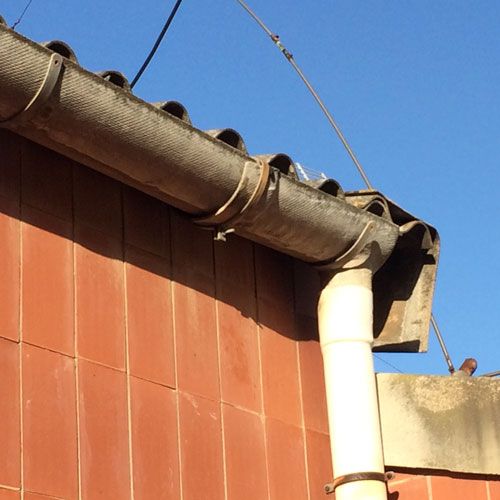
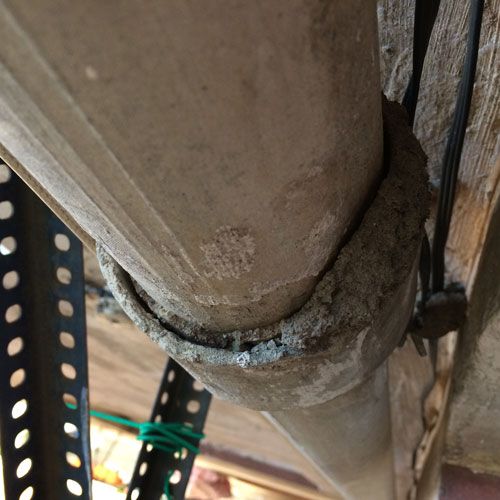
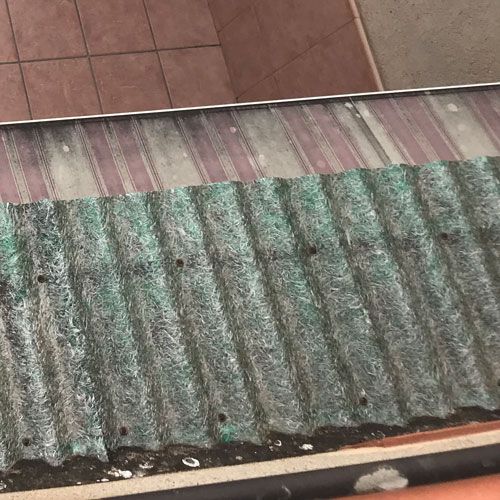
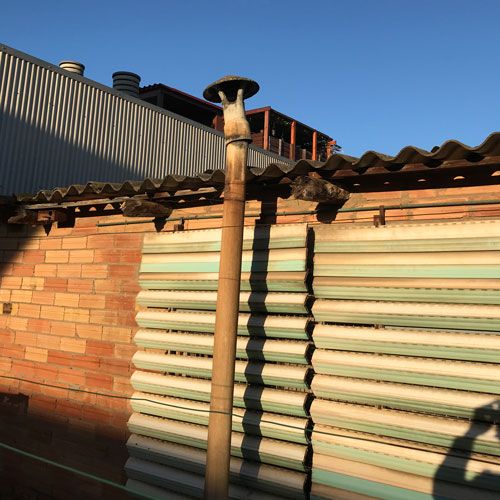
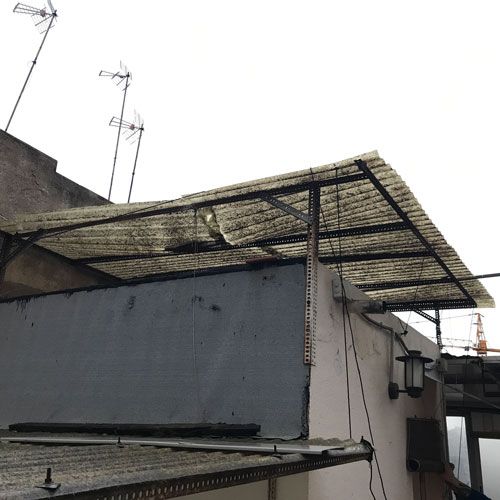
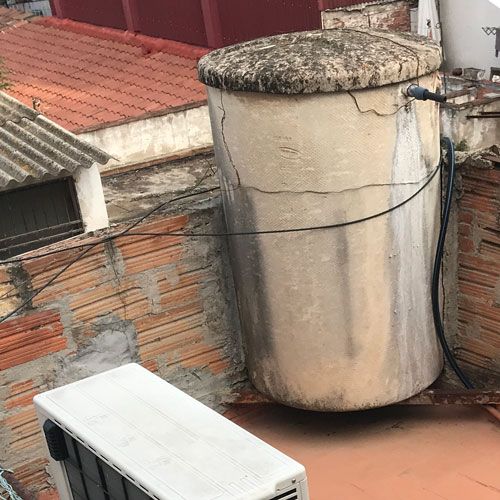
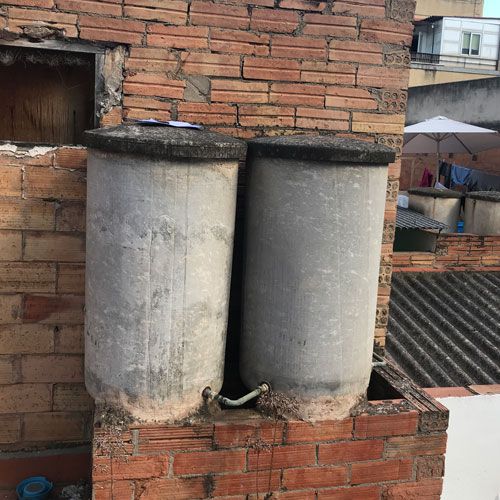
Fibre-cement products, better known by the brand that marketed them here in Spain, Uralita, contain asbestos as a reinforcing fibre. Although asbestos ceased to be used from 1990 onwards, all the buildings inspected were built before 1980, so they contain asbestos. It can be found in downpipes, roofs, party walls, water tanks, etc. It is a highly dangerous material, as asbestos is highly carcinogenic and causes very serious respiratory diseases. It must be removed by specialist companies.
This deficiency, identified in our ITE inspections, occurs exclusively in timber joinery. Over time, the protective paint has worn away, while exposure to sun, water and other external factors has eroded the wood.
In addition to allowing water to enter the building, this defect can cause the glass to fall if the glazing bead fails.
Many communities do not have a designated space for storing cleaning supplies and other items. As a result, they use the water or electricity meter room for this purpose. Under the decree, these spaces cannot be used for storage, so the community must find another place to keep these items.
The last of the most common deficiencies we have identified is not the responsibility of the communities. In most cases, we find installations running along building façades and roofs, including supports for overhead lines and equipment supplying telephone and internet services. These installations are often fitted one on top of another, without proper maintenance, and deteriorate over the years without the responsible companies carrying out any maintenance. In some cases, this creates hazardous situations.
If you need to have an ITE inspection, get your quote now and book an appointment as soon as possible.
We take care of everything, from coordinating visits to all the properties to submitting the report to the Agència de l’Habitatge to obtain the Certificate of Aptitude.